Practitioner | The Puno Quechua Project
Aug 6, 2025· ·
0 min read
Elwin Huaman
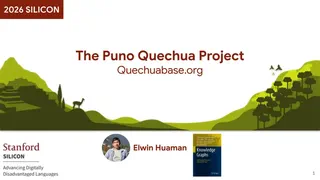 Photo by @ElwinHuaman
Abstract
The content in your language may have been moved, deleted, or possibly never existed. The Puno Quechua Project builds QuechuaBase.org, an open knowledge graph for Quechua languages, following four steps: creation (identifying sources and modelling lexemes, senses, forms and usage examples), hosting (Wikibase, MediaWiki, SPARQL, Common Voice, Drupal and Moodle), curation (Common Voice for speech data, Telegram for offline contributions and validations, Moodle for capacity building) and deployment (voice assistants combining ASR, small language models and TTS on top of the knowledge graph). Over the programme check-ins (February–March 2026) we linked usage examples and audio files to lexemes in Qichwabase, reported ~2K lexemes, ~3K sentences, ~6K audio files, ~31h of scripted and ~29h of spontaneous speech with 400+ reached contributors, and presented an ASR model for Puno Quechua.
Event
Location
Stanford University (Online)
Stanford, California

Authors
Research Engineer
Elwin Huaman is a Quechuan Researcher from Nuñoa Peru, working in the Centre for Human-Inspired Artificial Intelligence at the University of Cambridge. He has experience creating Knowledge Graphs within the civil society, academia and industry. He has co-authored the book: Knowledge Graphs - Methodology, Tools and Selected Use Cases, and is founder of QuechuaBase, a knowledge base ecosystem that supports a harmonization process of the language and knowledge of Quechua communities across the world while promoting their agency and digital inclusion.